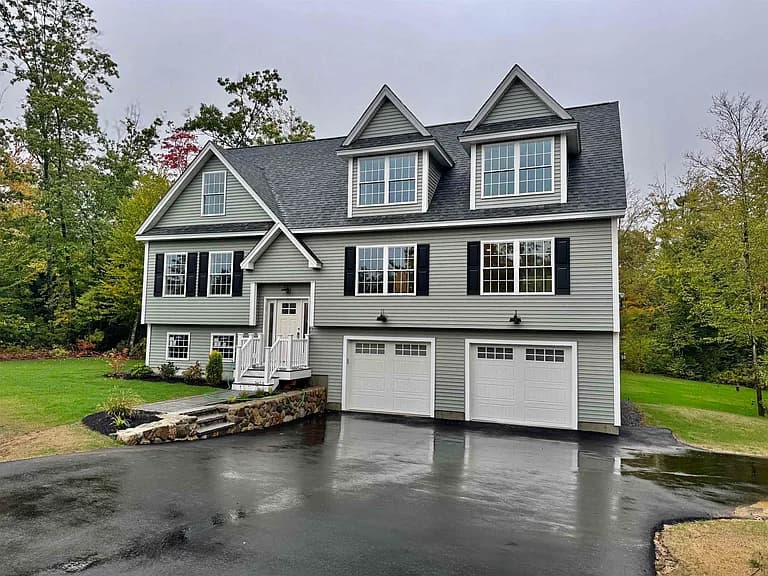
An accessory dwelling unit — an ADU, sometimes called an in-law suite or a guest cottage — is a second, smaller home on the same lot as your main house. In New Hampshire, they used to be hard to get approved. As of 2025, that changed in a big way. If you've thought about adding space for aging parents, a grown kid, a rental, or a home office with a bath, it's worth understanding what the law now allows.
What an ADU is
Under state law, an ADU is a self-contained living space — with its own sleeping, cooking, eating, and bathroom facilities — on a lot with a single-family home. It can be attached to your house (a converted portion, or an addition with its own entrance) or, now, a fully detached structure like a small cottage or a converted garage.
What changed in 2025
New Hampshire's ADU law lives in RSA 674:71 through 674:73. In 2025, House Bill 577 amended it, effective July 1, 2025, and moved the state firmly in favor of ADUs. The headline change: any town with zoning must allow one ADU per single-family lot by right, and that unit can be attached or detached. Detached ADUs being allowed by right is the biggest shift — along with a much simpler approval path than the planning-board hearings many towns used to require.
What your town must now allow
- •One ADU per single-family lot, by right — attached or detached.
- •ADUs in every zoning district that allows single-family homes.
- •A unit of at least 750 square feet — towns can't cap it smaller (and living space can't exceed 950 square feet unless your town allows more).
- •Conversion of an existing structure, including a detached garage, even if it doesn't meet current setback or lot-coverage rules.
- •A separate electrical panel and service for the unit.
What your town can still decide
- •It can require you to live in either the main house or the ADU — but not dictate which.
- •It can apply aesthetic standards, but only if it applies the same standards to your main house.
- •It can set specific rules within the limits the state law allows.
Thinking about a project like this?
We'll walk your space and put a clear written estimate in your hands.
In other words, the state sets the floor and your town fills in some of the details. That's why the specifics still vary from town to town.
What it means if you want to build one
For most New Hampshire homeowners on a single-family lot, an ADU is now realistic in a way it wasn't a few years ago. You'll still need building permits, and the unit still has to meet building code — the change is mostly in zoning and approval, not in the construction itself. A detached ADU is essentially a small custom build; an attached one is an addition with its own kitchen and entrance. Either way, it's real construction that deserves real management.
How we help
We build both — attached in-law suites as additions, and detached ADUs as small standalone builds — and we manage the whole project the way we manage any other: one point of contact, every trade scheduled and overseen, built to code. You confirm your town's specific ordinance; we handle turning the plan into a finished, permitted space.
A note before you plan
This is a general overview, not legal advice. New Hampshire's ADU rules changed recently, and your town may have its own specifics on top of the state law. Confirm the details with your local zoning and building office before you plan — and we're glad to talk through the construction side once you know what your lot allows.
If an ADU is on your mind — for family, for rental income, or just for flexibility — we'd be glad to walk your property and talk through what's possible, then put a clear written estimate in your hands.
Learn more about our adus & accessory buildings service.